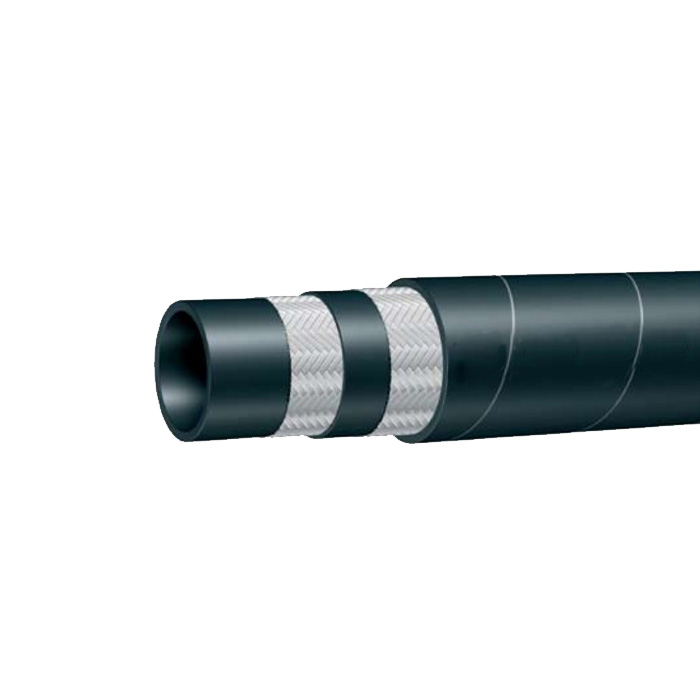
A 10000 PSI high pressure hose is designed for oil and gas systems where extreme pressure, temperature changes, and chemical exposure occur at the same time. Its safety depends on multi-layer steel reinforcement, pressure testing, material selection, and correct assembly. Many industrial designs use a 4:1 safety ratio, allowing a working pressure of 10000 PSI while testing burst resistance above 40000 PSI. Reinforcement layers, fittings, and hose materials must maintain performance through thousands of pressure cycles in drilling, hydraulic fracturing, and offshore operations.
A 10000 PSI hose must handle forces created by internal fluid pressure that can exceed 68.9 MPa. In oil and gas equipment, the hose structure normally includes an inner tube, reinforcement layers, and an outer cover. Each layer has a different purpose, and failure in any part can reduce service reliability.
The inner tube is usually made from synthetic rubber or thermoplastic materials selected for resistance to hydraulic oil, drilling fluids, and chemical additives. Some oilfield fluids contain aromatic hydrocarbons, hydrogen sulfide, and salt water, which can affect material strength over time. In many industrial designs, the hose material is tested across temperature ranges from approximately -40°C to 100°C to confirm stable performance.
The reinforcement layers carry most of the pressure load. A typical 10000 PSI high pressure hose uses multiple layers of steel wire braid or spiral-wrapped steel wire. Spiral reinforcement is commonly selected for very high-pressure applications because the wire layers distribute stress in different directions.
A multi-layer steel reinforcement structure allows the hose to contain high internal pressure while maintaining flexibility during equipment movement.
The angle and number of wire layers influence pressure capability. Spiral hoses often use four or more reinforcement layers, while braided designs may use two or more layers depending on pressure requirements. The steel wire used in these hoses can have tensile strengths above 1500 MPa, allowing the reinforcement to support repeated loading without rapid deformation.
Pressure rating alone does not define hose safety. Engineers also consider burst pressure, impulse life, temperature range, and environmental conditions. A hose rated at 10000 PSI is commonly designed with a working-to-burst pressure ratio of 4:1, meaning the assembly may be tested near 40000 PSI before failure.
| Parameter | Typical Requirement |
|---|---|
| Working pressure | 10000 PSI |
| Burst pressure | Around 40000 PSI or higher |
| Temperature range | -40°C to 100°C |
| Reinforcement | Multi-layer steel wire |
| Safety ratio | Approximately 4:1 |
This pressure margin becomes important because oilfield systems rarely operate under perfectly stable conditions. Hydraulic fracturing equipment can experience sudden pressure changes, while drilling systems may face vibration and movement for extended periods. Some hydraulic hose qualification procedures require more than 200000 impulse cycles to evaluate long-term pressure resistance.
Pressure cycling performance depends heavily on fatigue resistance. During drilling and well servicing, hoses may repeatedly expand and contract as pressure changes. Even a small amount of reinforcement movement can create stress concentration areas after thousands of cycles.
Laboratory testing in hydraulic applications has shown that repeated pressure cycling can affect hose life more than a single high-pressure event.
The outer cover provides protection against external damage. Oil and gas sites often expose hoses to rough metal surfaces, sand particles, sunlight, and mechanical contact. A strong cover material helps prevent abrasion damage and protects reinforcement wires from moisture and corrosion.
Chemical resistance is also required because oilfield fluids are rarely simple hydraulic oils. Production environments may include crude oil, drilling mud, completion fluids, and corrosive compounds. For example, hydrogen sulfide exposure requires materials that can maintain mechanical properties under sour gas conditions.
Manufacturers select hose compounds based on the operating environment. A hose used in offshore production may require better saltwater resistance, while a hose used in hydraulic fracturing equipment may require stronger abrasion protection due to frequent movement.
The connection between the hose and fitting is another area that requires careful engineering. High-pressure hose assemblies normally use crimped fittings that lock the fitting onto the reinforcement structure. Incorrect crimp dimensions can reduce holding strength or damage internal layers.
A complete assembly inspection usually includes checking:
-
Hose size and pressure rating compatibility
-
Correct fitting installation
-
Bend radius requirements
-
Surface damage
-
Leakage during pressure testing
Installation conditions have a direct effect on service life. A hose installed with excessive bending, twisting, or stretching may experience faster wear. Manufacturers normally provide minimum bend radius values, and operating below these limits can reduce reinforcement performance.
For example, a hose designed for a 150 mm minimum bend radius should not be forced into tighter curves during installation. The reinforcement layers need enough space to maintain their designed position during pressure changes.
Different oil and gas applications require different hose characteristics. Hydraulic fracturing equipment, offshore platforms, and drilling systems may all use 10000 PSI hoses, but their operating conditions are not identical.
| Application | Main Requirement |
|---|---|
| Hydraulic fracturing | High pressure cycle resistance |
| Offshore drilling | Corrosion and temperature resistance |
| Well intervention | Flexibility and repeated movement |
| Subsea equipment | Long service life and chemical resistance |
Standards and testing procedures help maintain consistent quality. International industrial standards define requirements for pressure testing, material performance, and manufacturing processes. Manufacturers often perform hydrostatic tests, burst tests, impulse tests, and temperature evaluations before supplying hoses for demanding applications.
A hydrostatic test checks whether the hose can hold pressure without leakage or structural damage. Burst testing determines the maximum pressure level before failure. Impulse testing evaluates how the hose performs when pressure repeatedly rises and falls.
Modern manufacturing also uses inspection technologies to improve consistency. Automated systems can check wire placement, cover thickness, and assembly dimensions during production. These measurements reduce differences between individual hose assemblies.
Material technology continues to improve high-pressure hose performance. New elastomer compounds provide better resistance to heat and chemicals, while improved steel reinforcement designs increase pressure capacity without making the hose excessively rigid.
A properly selected high pressure hose for oil and gas service must match pressure, temperature, fluid type, movement conditions, and installation requirements. A hose that performs well in one application may not be suitable for another environment.
Safe operation at 10000 PSI depends on the complete hose assembly, including materials, reinforcement design, fittings, testing procedures, and field installation practices.
Regular inspection is also necessary during service. Operators typically check for cover damage, leakage, corrosion near fittings, unusual deformation, and changes in flexibility. Replacing damaged assemblies before failure helps maintain reliable operation in demanding oil and gas systems.
A 10000 PSI hose combines high-strength reinforcement, durable materials, and controlled manufacturing processes to handle extreme oil and gas conditions. Its performance comes from the interaction of every component rather than a single material or design feature.